A cross-disciplinary SUTD Capstone 2026 team combining engineering, design, and computing, now working with an industry partner on a real-world challenge across one full academic year.
Architecture and Sustainable DesignComputer Science and DesignEngineering Products and DesignEngineering Systems and DesignArchitecture and Sustainable DesignComputer Science and DesignEngineering Products and DesignEngineering Systems and Design
Focusing strongly on technology and building a strong foundation in design and innovation, we aim to educate technologically grounded leaders who are steeped in the fundamentals of mathematics, science and technology.
02Disciplines
Disciplines
Architecture and Sustainable Design, Computer Science and Design, Engineering Product Development, Engineering Systems and Design — four disciplines on one campus.
03Technology
Technology
Strong foundation in mathematics, science, and cutting-edge technology
04Design
Design
Human-centered approach to problem-solving and innovation
05Innovation
Innovation
Entrepreneurial mindset and creative solutions for real-world challenges
We aim to create a diverse space that builds the future of tomorrow — where students from different disciplines collaborate, innovate, and push boundaries to solve the world's most pressing challenges.
What is Capstone: University-Industry Partnership Program
The premier capstone program where academic excellence meets industry innovation through collaborative student projects.
One academic year, one industry problem, one dedicated team.
The SUTD Capstone project is a flagship University-Industry partnership program whereby cross-disciplinary student teams collaborate with companies to solve complex real-world challenges through innovative capstone solutions.
1Full academic year
One problem, followed the whole way through
A capstone team stays with a single industry problem for the length of the academic year — long enough to understand it properly, iterate against it, and return something tested rather than sketched.
5-7Students per team
Final-year undergraduates, not interns
Capstone teams consist of 5 to 7 final-year undergraduate students who dedicate an entire academic year to tackling your most pressing technical and business challenges. Each capstone project combines theoretical knowledge with practical application, ensuring deliverable solutions that create real impact.
4SUTD pillars
Cross-disciplinary by construction
Capstone draws on all four SUTD pillars — Architecture and Sustainable Design, Computer Science and Design, Engineering Product Development, and Engineering Systems and Design — so a single team can carry hardware, software, systems and design thinking at once.
Academic learning to professional practice.
This immersive capstone experience bridges the gap between academic learning and professional practice, allowing students to demonstrate their expertise while delivering tangible value to industry partners. The capstone program has become a cornerstone of SUTD's commitment to industry-relevant education and innovation.
Key Capstone Program Highlights
01
University-Industry Capstone Partnership
Collaborative capstone projects bridging academic learning with real-world business challenges through structured industry engagement
02
Cross-Disciplinary Capstone Teams
Capstone teams of 5-7 students from diverse engineering and design disciplines working together to deliver comprehensive solutions
03
Real-World Capstone Impact
Apply technical and business knowledge through capstone projects that solve actual industry problems with measurable outcomes
About Team PRSM — a skunkworks of positive impact
Refracting one vision into many perspectives.
07
Members
One skunkworks
04
Disciplines
ASD · CSD · EPD · ESD
05
Core values
Refracted from one vision
01
Capstone year
SUTD industry partnership
Keep scrolling — the gallery travels sideways
Capstone showcase
0107
Our Vision
Our vision is to become a skunkworks of positive impact — a team that refracts diverse perspectives into breakthrough innovations that are bold, ethical, and transformative.
We strive to shape a future where technology illuminates rather than overwhelms, and where every solution we create uplifts people, communities, and the world.
One beam, many bands
0207
Our Mission
At PRSM, our mission is to innovate boldly and build responsibly.
Inspired by skunkworks culture, we move fast, think fearlessly, and combine our diverse disciplines to transform complex challenges into purposeful solutions.
We are driven by a commitment to do good, do no harm, and ensure that every idea we develop makes a meaningful, human-centred impact.
Our Core Values
Five commitments, held by every one of us.
03 — 07
03
03
Integrity
We build with honesty, transparency, and ethical responsibility in every decision we make
04
04
Curiosity
We ask questions, explore possibilities, and never stop learning
05
05
Collaboration
We combine diverse perspectives to create solutions greater than the sum of their parts
06
06
Sustainability
We design for longevity, considering environmental and social impact in everything we create
07
07
Equity
We ensure our innovations are accessible, inclusive, and beneficial to all
Seven people, seven ways of thinking
Diverse expertise, unified vision — the individuals powering Team PRSM.
01
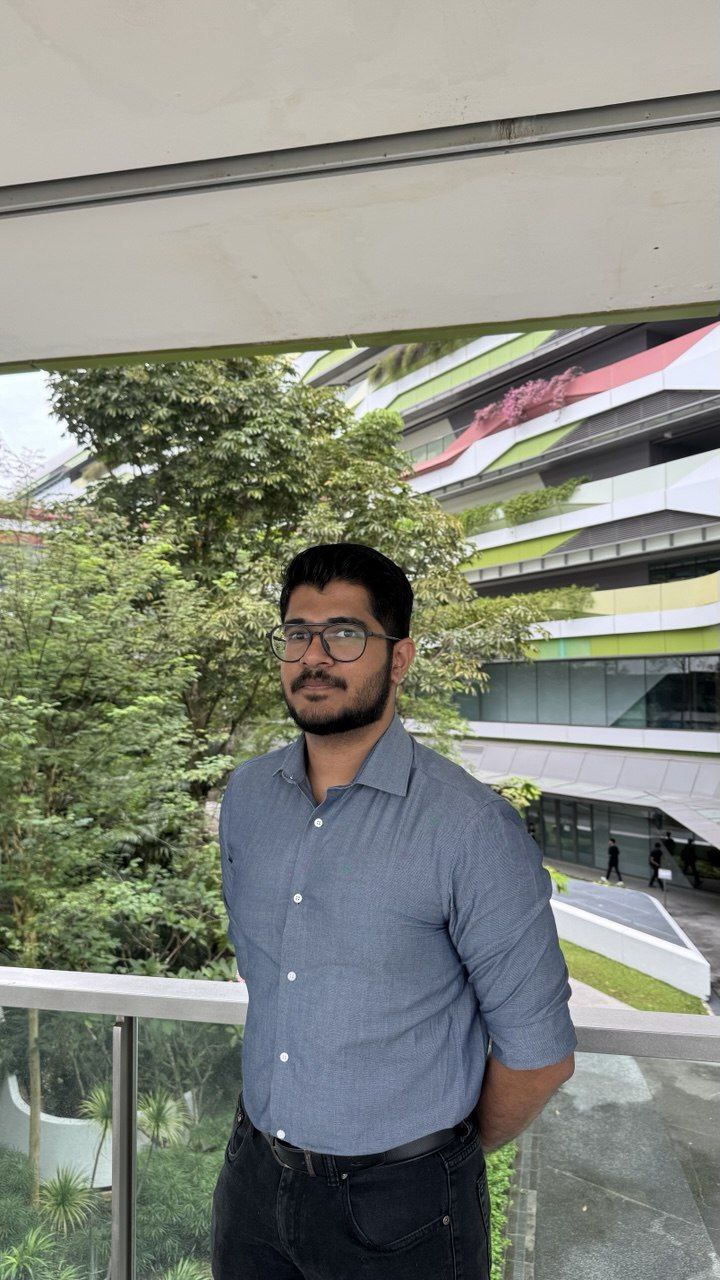
Akash Subramani
Hardware & Robotics Engineer
EPD/Engineering Products and Design
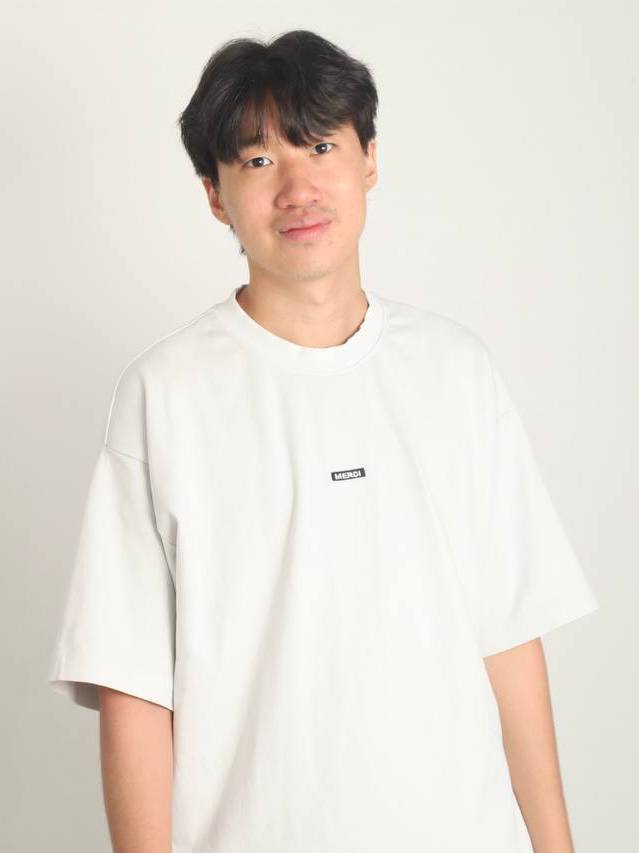
Known as the team's go-to hardware specialist, he has designed and built systems across robotics, fluid mechanics, power electronics, and space engineering. His portfolio includes the mechanical systems for an autonomous mushroom harvester addressing Singapore's food resilience, precision valve and servo assemblies for a fluid-based musical encoder, and a solar-powered lighting system deployed in a remote Cambodian village. He also contributed to the end-to-end development, launch, and telemetry collection of a compact Arduino-based satellite. With a strong focus on practical engineering and elegant problem-solving, he turns complex ideas into reliable, real-world hardware.
Robotics
Mechanical Design
Power Electronics
Embedded Systems
02
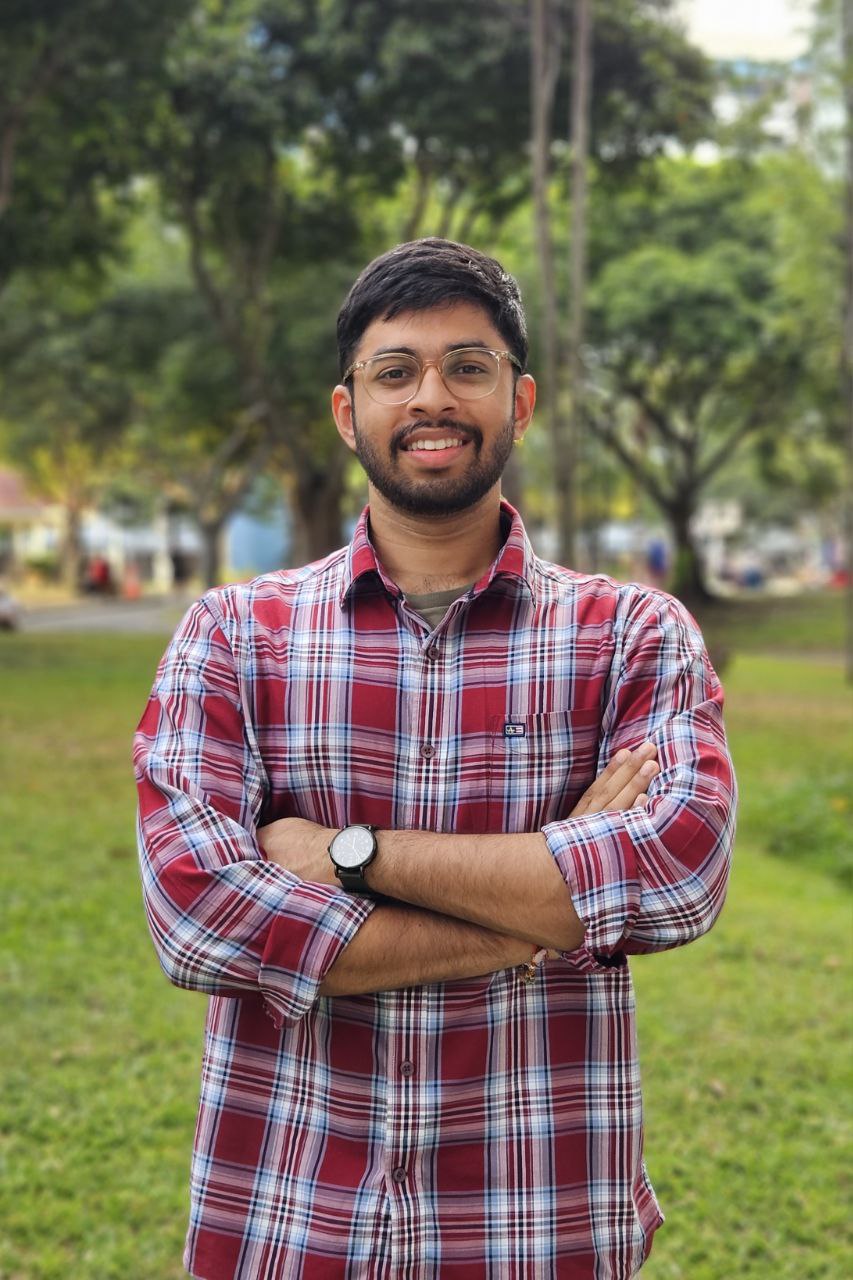
Baddipadige Amith Reddy
Cybersecurity & Software Engineer
CSD/Computer Science and Design
A cybersecurity major with a talent for building sharp, high-impact tech. He's created everything from a real-time computer vision plugin that identifies outfits on streaming platforms, to a full Unix shell built from scratch. His hardware experience includes a reaction game powered by a custom Beta Assembly ALU, and he also helped develop Wandr, an AI-driven travel companion app. He brings together low-level engineering, AI, and security know-how to turn ambitious ideas into polished systems.
Cybersecurity
Computer Vision
Systems Programming
AI/ML
03
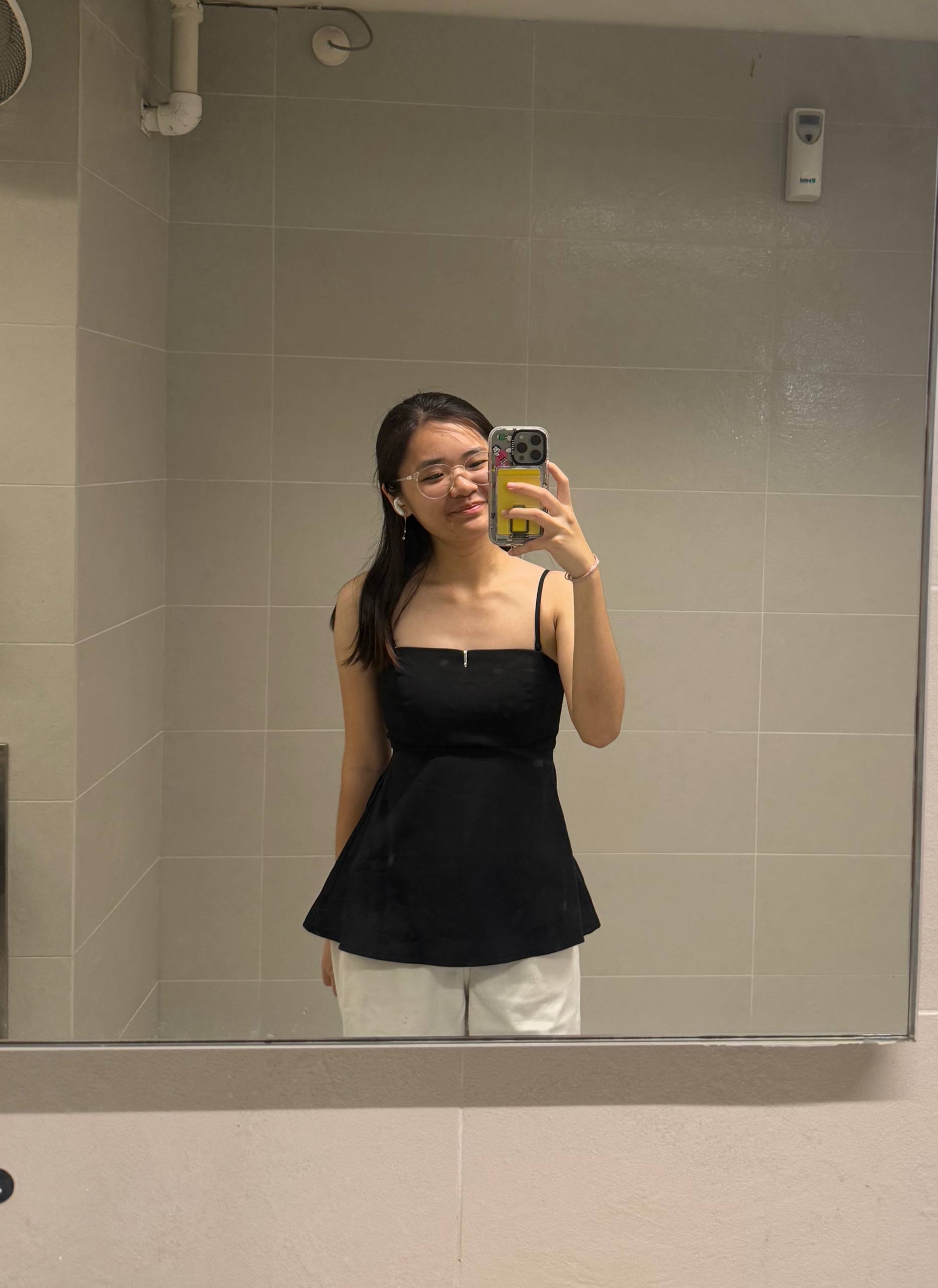
Berlyn Tan
Data Analyst & Optimization Engineer
ESD/Engineering Systems and Design
An ESD student focused on optimisation and data-driven decision-making. She built an integer linear programming model to maximise profitability on an Airbus A350-900 route and developed an interactive performance dashboard with DGCT using MySQL, forecasting models, and analytics to guide scalable capacity planning. She combines strong modelling skills with practical insights to improve system efficiency and performance.
Python
MySQL
Optimization
Data Analytics
04
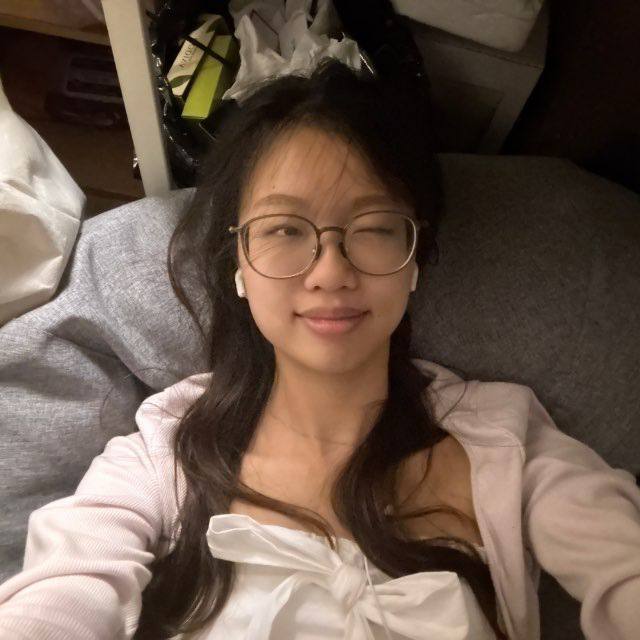
Goh Xun Yi Joey
Systems Engineer & IoT Specialist
ESD/Engineering Systems and Design
A versatile engineer skilled in analytics, interactive systems, and smart infrastructure. She helped build a PowerBI sales dashboard for Beauty Mums & Babies, analyzing 10,000+ records to uncover trends for targeted marketing. She also co-developed a gamified running system featuring sensors, a live leaderboard, and a Figma-designed companion app to drive engagement. In Project Sun Bringer, she designed a low-maintenance remote lighting system using Wi-Fi routers, smart switches, and an integrated control app to improve accessibility and reduce manpower demands.
PowerBI
IoT
System Design
Data Visualization
05
Leo Nyuk Sze
Architectural Designer & Systems Innovator
ASD/Architecture and Sustainable Design
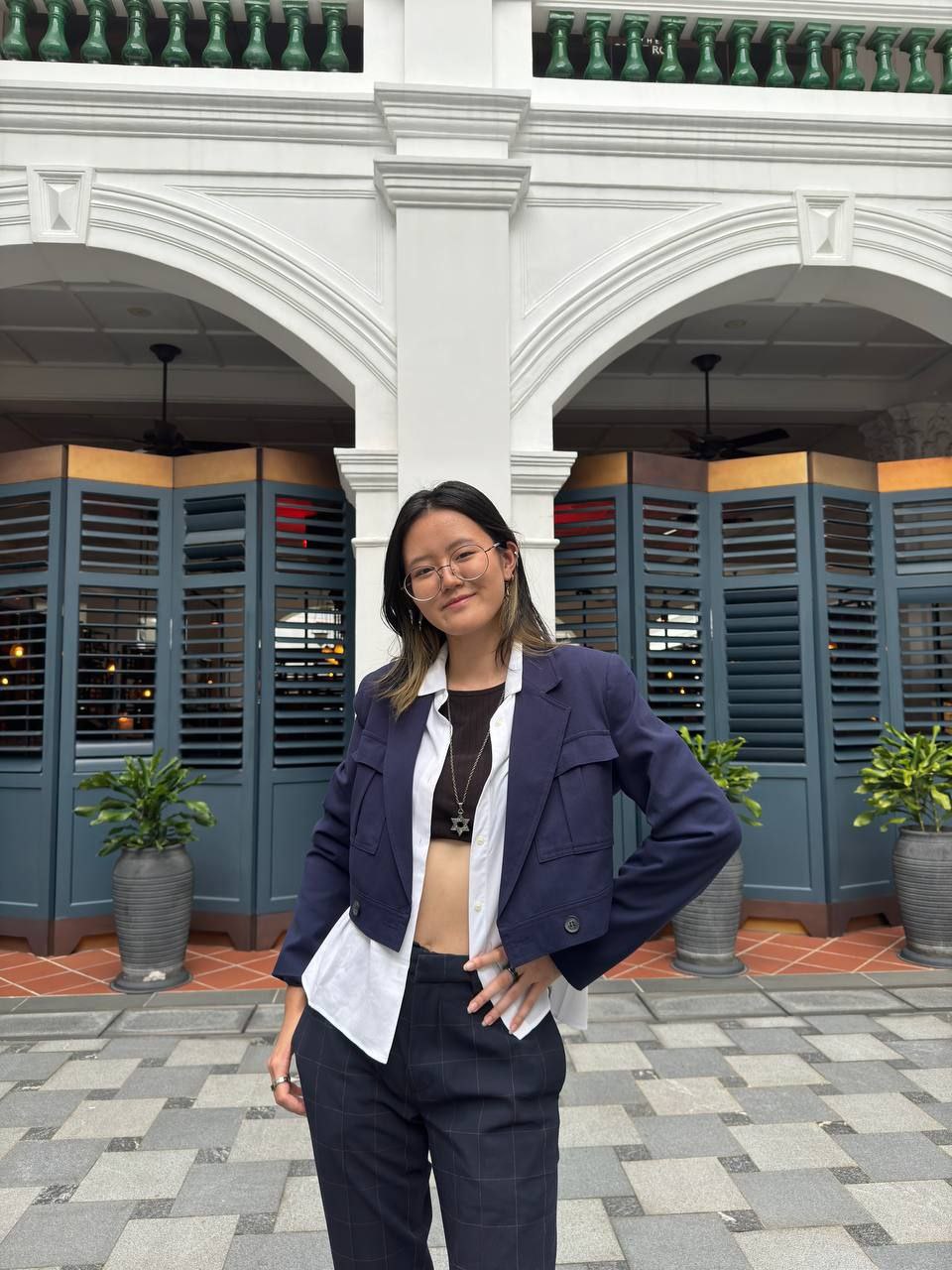
A multidisciplinary designer driven by human-centred innovation, she creates spaces and systems that blend technology, sustainability, and meaningful social impact. Her work spans architectural design, parametric structural optimization, and community-focused food solutions—ranging from suspended bridge prototypes to vertical farming systems and nature-integrated libraries. With a strong foundation in computational tools like Grasshopper, Python, and structural simulation plug-ins, she brings together technical rigor and thoughtful design to craft experiences that connect people, support well-being, and empower resilient communities.
Grasshopper
Python
Parametric Design
Sustainable Architecture
06
Ainsley Woo
Cybersecurity & AI Specialist
CSD/Computer Science and Design
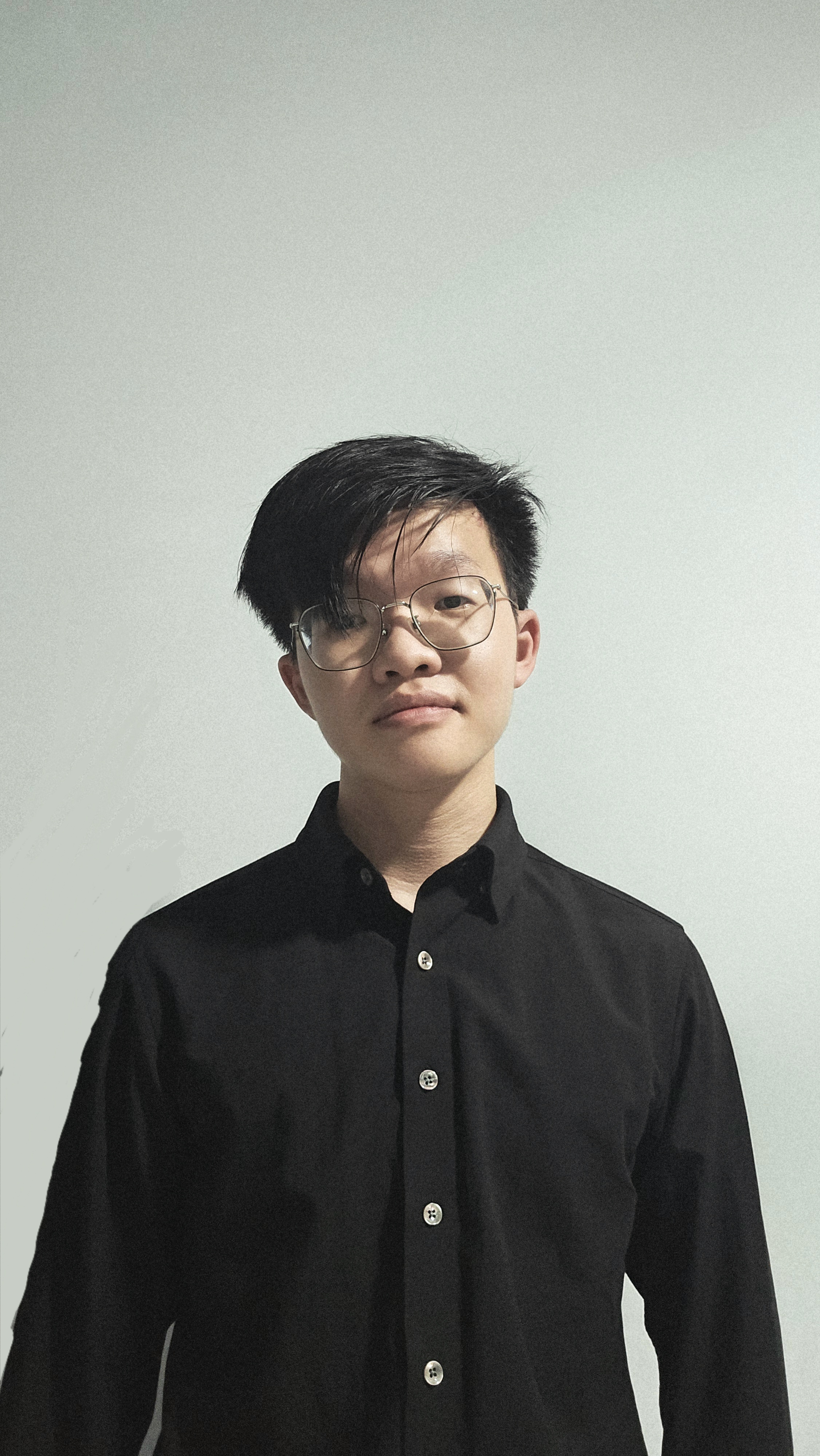
A cybersecurity major with an AI minor, he specializes in building robust, low-level systems and intelligent applications. His work ranges from developing a fully functional Unix shell from the ground up to engineering a hardware reaction game powered by a custom Beta Assembly ALU. He has also built AI-driven platforms such as Wandr, a smart travel companion, IELTS SenseAI for personalized language training, and a multilingual hate-speech detection ensemble using transformer models. With strengths across operating systems, hardware design, and applied machine learning, he delivers secure, high-performance solutions end to end.
Cybersecurity
AI/ML
Systems Programming
NLP
07
Alson Tay
Computational Designer & Urban Strategist
ASD/Architecture and Sustainable Design
A computational designer focused on creating resilient, data-informed urban environments. He integrates parametric design, algorithmic thinking, and sustainable principles to shape buildings and infrastructure that respond intelligently to their contexts. His work spans generative facade systems, optimized urban layouts, and climate-responsive architectural forms—leveraging tools like Grasshopper, Rhino, and Python-driven simulations to bridge design intent with environmental performance. With a strong foundation in both digital fabrication and urban planning strategies, he develops spaces that balance aesthetic clarity, ecological responsibility, and the evolving needs of dynamic communities.
Selected work by Team PRSM across Architecture and Sustainable Design, Computer Science and Design, Engineering Products and Design, and Engineering Systems and Design
AgriwaveParametric BridgeThe Deep LibraryWandrDuck Duck GuessDripSeekIELTS SenseAIFluid Mechanics Design ProjectAutonomous Mushroom HarvesterCambodia FACT - Solar Lighting SystemBerlin Summer Program – CanSat SatelliteAirplane Seat Configuration OptimisationDGCT Performance DashboardProject BabystepsProject GrowTrackRunProject Sun Bringer
01 / 16
Agriwave
ASD · Urban Agriculture · 2025
Parametric Bridge
ASD · Structural Engineering · 2025
The Deep Library
ASD · Social Architecture · 2025
Wandr
CSD · AI Travel Platform · 2025
Duck Duck Guess
CSD · Hardware-Software Integration · 2025
DripSeek
CSD · Computer Vision · 2025
IELTS SenseAI
CSD · EdTech AI Platform · 2025
Fluid Mechanics Design Project
EPD · Mechanical Engineering · 2025
Autonomous Mushroom Harvester
EPD · Food Technology · 2025
Cambodia FACT - Solar Lighting System
EPD · Social Impact Engineering · 2025
Berlin Summer Program – CanSat Satellite
EPD · Space Engineering · 2025
Airplane Seat Configuration Optimisation
ESD · Operations Research · 2025
DGCT Performance Dashboard
ESD · Data Analytics & Forecasting · 2025
Project Babysteps
ESD · Business Intelligence · 2025
Project GrowTrackRun
ESD · Gamified IoT System · 2025
Project Sun Bringer
ESD · Public Transport Infrastructure · 2025
Agriwave
ASD · Urban Agriculture · 2025
SUTD Architecture and Sustainable Design. Developed in collaboration with a multidisciplinary team, this project focuses on vertical farming systems that strengthen community food security while supporting mental well-being. Contributions include generating design variations and technical drawings through custom Grasshopper scripts, enabling efficient exploration of scalable, community-friendly farming structures. Skills: Grasshopper Scripting, Parametric Design, Vertical Farming, Community Design. Impact: Enhanced food security. PRSM members on this project: Leo Nyuk Sze and Alson Tay.
Parametric Bridge
ASD · Structural Engineering · 2025
SUTD Architecture and Sustainable Design. Designed a suspended, geometrically dynamic bridge spanning 3+ meters, balancing structural integrity with architectural aesthetics under strict engineering constraints (60 kg load, end supports only). Developed custom Python scripts and performed structural optimization using Kangaroo and Galapagos in Grasshopper. Used Karamba for member stress assessment and participated in full fabrication—from material selection to assembly and load testing. Skills: Python Scripting, Grasshopper, Kangaroo, Galapagos, Karamba. Impact: Structural innovation. PRSM members on this project: Leo Nyuk Sze and Alson Tay.
The Deep Library
ASD · Social Architecture · 2025
SUTD Architecture and Sustainable Design. A library designed to foster human interaction while being secluded within and integrated with nature. Forces social interaction through unplanned encounters in traditionally ignored spaces like staircases, emphasizing the journey over the destination through carefully crafted views and light changes. Challenges the digital-first "Google it" culture by creating a physical space for collective knowledge sharing. Skills: Social Design, Nature Integration, Experience Design, Spatial Planning. Impact: Human-centered spaces. PRSM members on this project: Leo Nyuk Sze and Alson Tay.
Wandr
CSD · AI Travel Platform · 2025
SUTD Computer Science and Design. A comprehensive travel companion that helps users discover, plan, and share their travel experiences. Using AI-powered recommendations and community-driven content, it creates personalized itineraries based on user preferences, budget, and travel style. Skills: AI Recommendations, Full-Stack Development, Community Features, Personalization. Impact: Personalized travel planning. PRSM members on this project: Baddipadige Amith Reddy and Ainsley Woo.
Duck Duck Guess
CSD · Hardware-Software Integration · 2025
SUTD Computer Science and Design. Developed a hardware-based reaction game where ducks light up in sequence, and players must hit them in the correct order. Designed and built the entire system from scratch, including the game logic, state machine architecture, and a custom Beta Assembly ALU to drive the game mechanics. Skills: Digital Design, Beta Assembly, State Machines, Hardware Integration. Impact: Custom ALU implementation. PRSM members on this project: Baddipadige Amith Reddy and Ainsley Woo.
DripSeek
CSD · Computer Vision · 2025
SUTD Computer Science and Design. A browser plugin that identifies clothes worn by actors in real time on streaming platforms, letting users instantly shop similar styles. An agentic computer vision solution that bridges entertainment and e-commerce seamlessly. Skills: Computer Vision, Browser Extension, Real-Time Processing, AI Agents. Impact: Real-time style detection. PRSM members on this project: Baddipadige Amith Reddy.
IELTS SenseAI
CSD · EdTech AI Platform · 2025
SUTD Computer Science and Design. Uses advanced Gemini, Heylabs, and Elevenlabs to provide personalized and realistic IELTS preparation. The platform analyzes writing samples, provides detailed feedback, and generates practice questions tailored to each student's proficiency level. Skills: Gemini AI, Natural Language Processing, Educational Technology, Personalized Learning. Impact: AI-powered IELTS prep. PRSM members on this project: Ainsley Woo.
Fluid Mechanics Design Project
EPD · Mechanical Engineering · 2025
SUTD Engineering Products and Design. Explored a novel way of encoding musical notes using liquid, oil, and air intervals. The mechanical subsystem features custom-designed valves and servo mechanisms that precisely generate fixed fluid and air pulses, enabling the system to "play" notes through controlled flow patterns. Skills: Fluid Mechanics, Mechanical Design, Servo Systems, Precision Engineering. Impact: Novel musical encoding. PRSM members on this project: Akash Subramani.
Autonomous Mushroom Harvester
EPD · Food Technology · 2025
SUTD Engineering Products and Design. Delivered a fully automated mushroom harvester engineered to boost Singapore's food resilience. Its mechanical systems enable precise growth conditions and gentle, reliable harvesting—turning mushroom farming into a scalable, hands-off process that supports sustainable local food production. Skills: Automation, Mechanical Systems, Agricultural Engineering, Sustainability. Impact: Enhanced food resilience. PRSM members on this project: Akash Subramani.
Cambodia FACT - Solar Lighting System
EPD · Social Impact Engineering · 2025
SUTD Engineering Products and Design. Delivered a solar-powered lighting system for a mobile library in rural Siem Reap, Cambodia. The electrical setup was built using easily sourced local components, with power requirements carefully calculated to meet the villagers' operational needs—a reliable, sustainable lighting solution supporting community learning in remote areas. Skills: Solar Power, Electrical Design, Sustainability, Community Engineering. Impact: Powered rural education. PRSM members on this project: Akash Subramani.
Berlin Summer Program – CanSat Satellite
EPD · Space Engineering · 2025
SUTD Engineering Products and Design. Designed, built, and launched a fully functional satellite from the ground up. Using Arduino hardware and custom-fabricated circuit boards, the team created a compact, efficient platform capable of transmitting telemetry data from orbit—demonstrating end-to-end satellite engineering in a lightweight form factor. Skills: Satellite Design, Arduino, Circuit Fabrication, Telemetry Systems. Impact: Successful orbital launch. PRSM members on this project: Akash Subramani.
Airplane Seat Configuration Optimisation
ESD · Operations Research · 2025
SUTD Engineering Systems and Design. Developed an integer linear programming model to optimise seat configurations for an Airbus A350-900 operating on the London-Delhi route. Evaluated space, weight, and demand constraints to maximise overall profitability, refining model parameters and validating results against real-world operational data. Skills: Mathematical Modelling, Operations Research, Data-Driven Analysis, Scenario Validation. Impact: Maximised profitability. PRSM members on this project: Berlyn Tan.
DGCT Performance Dashboard
ESD · Data Analytics & Forecasting · 2025
SUTD Engineering Systems and Design. Collaborated with Digital Content Technologies (DGCT) to develop an interactive dashboard visualising storage, bandwidth usage, and system performance metrics. Performed data cleaning and analysis using MySQL and Excel to identify usage patterns and inefficiencies, applying XGBoost and exponential smoothing for storage growth projections. Skills: MySQL, Excel, XGBoost, Forecasting, Dashboard Design. Impact: Improved scalability planning. PRSM members on this project: Berlyn Tan.
Project Babysteps
ESD · Business Intelligence · 2025
SUTD Engineering Systems and Design. Developed an interactive sales dashboard for Beauty Mums & Babies using PowerBI, analyzing over 10,000 sales records to identify key trends in sales performance and customer demographics. Delivered actionable insights to support targeted marketing strategies and business growth. Skills: PowerBI, Data Analytics, Customer Segmentation, Sales Trends. Impact: 10,000+ records analyzed. PRSM members on this project: Goh Xun Yi Joey.
Project GrowTrackRun
ESD · Gamified IoT System · 2025
SUTD Engineering Systems and Design. Created a gamified running system to boost motivation and social interaction among runners. Featured Light Pacer, checkpoint displays, infrared sensors, live leaderboard, and a Figma-designed companion app that enhanced safety, engagement, and friendly competition. Skills: IoT Sensors, System Design, Figma Prototyping, Gamification. Impact: Enhanced user engagement. PRSM members on this project: Goh Xun Yi Joey.
Project Sun Bringer
ESD · Public Transport Infrastructure · 2025
SUTD Engineering Systems and Design. Devised the design of an easily maintainable remote lighting system for pathways, integrating Wi-Fi routers, smart switches, a physical switch at the control station, and a companion app for seamless control by staff — improving accessibility while reducing manpower demands. Skills: IoT, Smart Switches, System Design, Companion App. Impact: 4th place, SBS Transit hackathon. PRSM members on this project: Goh Xun Yi Joey.
Team PRSM has secured an industry partner for SUTD Capstone 2026. The first four stages of the partnership process are closed; what follows is the record of how they ran.
Nothing advanced until both sides were ready for the next stage.
Initial exploratory session to discuss project possibilities and explore potential collaboration opportunities. This can be conducted online or in-person based on your preference.
Project possibilities
Collaboration scope
Your preference
Online or in-person01 / 05
02
Phase 02Phase02
CompleteFEB'26 – MAR'26
Joint Needs Assessment
Collaborative needs assessment session to understand your requirements and customize a comprehensive project proposal tailored to your specific objectives.
Requirements
Customised proposal
Your objectives
Proposal drafted02 / 05
03
Phase 03Phase03
Complete2-4 Weeks
Legal & Financial Documentation
Preparation and review of all legal agreements, financial documentation, and formal contracts required for the partnership.
Legal agreements
Financial documentation
Formal contracts
Paperwork03 / 05
04
Phase 04Phase04
CompleteAPR'26 – JUN'26
Approval Process
Formal approval process where both parties review and finalize all agreements. The project is officially approved only when both parties have signed the partnership agreement.
Joint review
Finalised agreements
Signed by both parties
Both parties sign04 / 05
05
Phase 05Phase05
UpcomingSEP'26 – APR'27
Capstone Project Execution
Full Capstone project development cycle including research, design, implementation, testing, and final delivery. Regular check-ins and progress updates throughout the development period.
Research
Design
Implementation
Testing
Final delivery
Build and deliver05 / 05
Stages one to four are closed and documented. Stage five runs from September 2026 to April 2027.
Urban areas need flexible, high-capacity public transport systems that are cheaper and faster to deploy than rail-based MRTs. A trackless MRT offers the opportunity to deliver MRT-level efficiency without the cost, construction delays, or physical track constraints, enabling cities to expand transit coverage rapidly and adapt routes dynamically as demand changes.
High-capacity transit
Rapid deployment
Dynamic routing
02
Artificial Intelligence for Commerce
In a future where AGI handles life’s busywork, buying and selling physical items shouldn’t still rely on humans manually searching, pricing, and listing them. To get there, we need a way for intelligent agents to see the real world. This project builds that bridge: AI trading agents paired with recognition-powered smart glasses that instantly identify objects, evaluate their value, and help users buy or sell with zero effort. It’s a first step toward a world where your AGI can manage your physical assets as easily as your digital life.
AI trading agents
Recognition-powered smart glasses
Object valuation
03
Drone Deployment and Operations
As demand for rapid, on-demand delivery grows, drones offer a promising solution. However, safety, reliability, and precise navigation remain major barriers to real-world deployment. Current delivery drones struggle with obstacle avoidance, secure payload handling, and resilient operation in complex urban environments. There is a need for a safer, smarter drone system that can deliver goods autonomously while protecting people, property, and the package itself. This project aims to create a next-generation "safe delivery drone" that integrates intelligent routing, real-time risk assessment, and robust fail-safes to make autonomous aerial deliveries both practical and trustworthy.
Obstacle avoidance
Secure payload handling
Real-time risk assessment
SUTD Capstone runs the full academic year, in partnership with industry.
What the Partnership Involves
Five terms, agreed at sign-off with our Capstone 2026 industry partner and held across the year-long project.
Site visits and employee interviews take place on the partner's own premises.
SGD05
6,000
Participation Fee
Participation fee supporting project development, resources, and operational costs.
Recorded here as documentation of how the team works with a partner organisation across a Capstone year.
Provided by the Partner Organisation
01
Site Visits & Employee Interviews
Site visits are arranged where the project calls for them, so the team can interview employees and work with access to relevant stakeholders and work environments.
02
Digital Brand Asset Packs and Guidelines
Brand assets — logos, colour palettes, typography guidelines and design systems — are shared with the team so what gets built stays consistent with the partner organisation.
03
Commercial Licenses for Software and Specialized Tools
Commercial licences for the software and specialised tools a project needs are supplied for the development and testing period.
04
Dedicated Mentor
A dedicated mentor from the partner organisation guides the team, provides domain expertise, and keeps communication running throughout the project.
Intellectual Property Rights
100% IP and all generated materials belong to partner organisation.
The partner organisation retains full ownership and rights to all project deliverables, code, designs, documentation, and intellectual property created during the Capstone project.
How the TeamWorks
A skunkworks of positive impact—transforming complex challenges into purposeful, innovative solutions. Team PRSM is partnered with an industry partner for SUTD Capstone 2026.
7
Team Members
4
SUTD Disciplines
ASDCSDEPDESD
01
Cross-Disciplinary Expertise
Our team spans 4 core SUTD pillars: Computer Science, Engineering Systems, Engineering Product Design, and Architecture—bringing diverse perspectives to every challenge
02
Cutting-Edge Technical Skills
From AI/ML and cybersecurity to robotics, IoT, and data analytics, we combine emerging technologies with proven engineering fundamentals
The Capstone programme
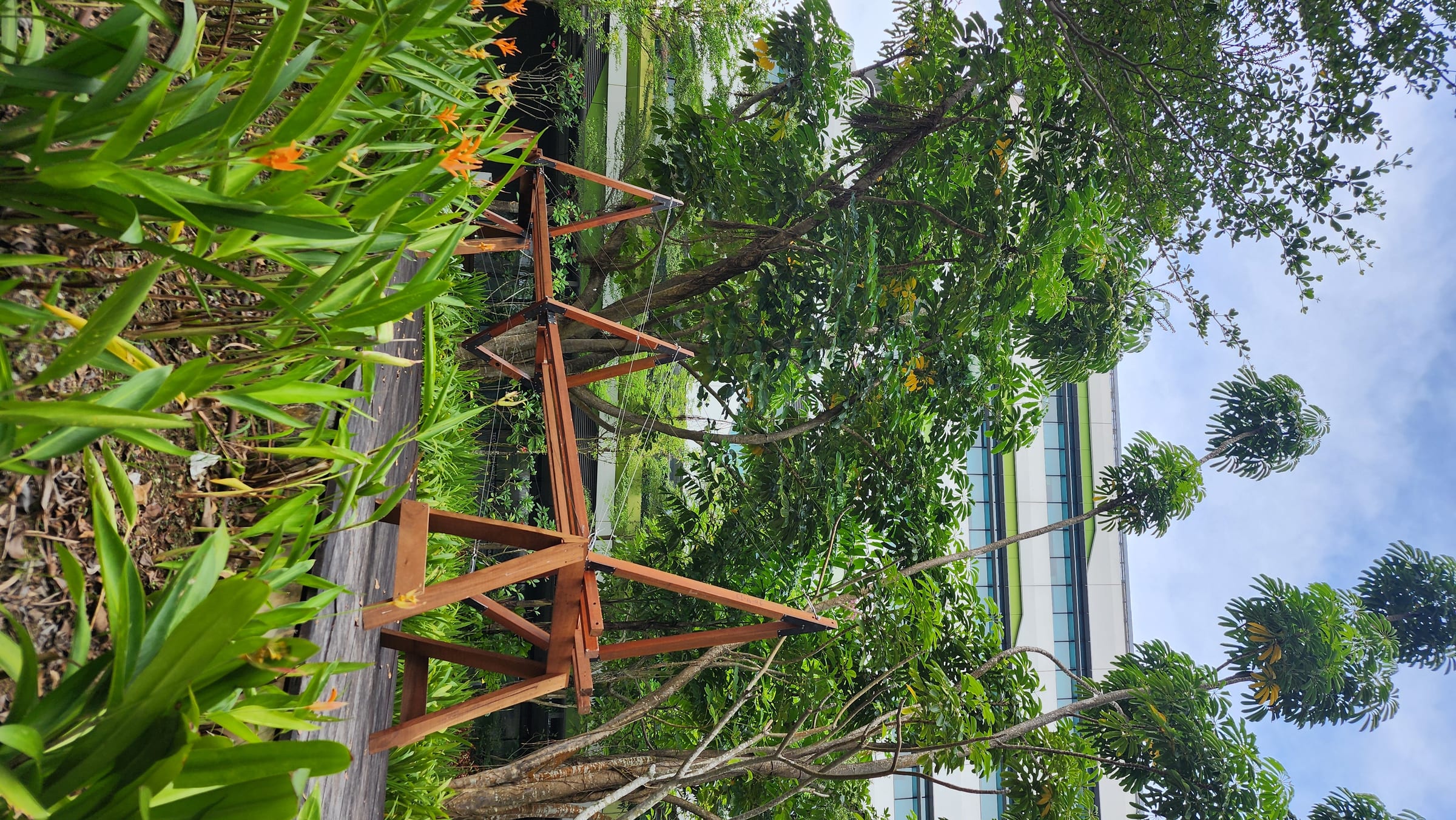
Structures on the walkway
03
Real-World Project Experience
Proven track record with autonomous systems, AI-driven applications, interactive dashboards, smart infrastructure, and embedded systems across multiple industries
04
Innovation with Integrity
Guided by core values of integrity, curiosity, collaboration, sustainability, and equity—we build solutions that are ethical, inclusive, and impactful
Programme Terms
8
A team of 7 students working across 4 SUTD disciplines
One full academic year of dedicated development, September to April
100% intellectual property rights belong to the partner organisation
SGD 6,000 participation fee covering development, resources and operating costs
Academic research methods applied to a practical engineering problem
A year of close working contact with emerging engineering talent
A contribution to engineering education alongside the project work
Support from SUTD faculty mentors and university resources
Team PRSM has secured an industry partner for SUTD Capstone 2026. Execution runs September 2026 to April 2027, with seven members across four SUTD disciplines. Selected Work collects what the members have built before it.
Every question a capstone partner asks before the first meeting, answered in full.
07
students on the team
04
disciplines represented
2–4h
partner time, monthly
Sep–Apr
one full academic year
Capstone Program FAQ
01
What is a Capstone project?
A Capstone project is a comprehensive, year-long university-industry partnership program where final-year undergraduate students work in cross-disciplinary teams to solve real-world business and technical challenges. The SUTD Capstone program pairs teams of 5-7 students from diverse disciplines with industry partners to deliver innovative, practical solutions that bridge academic knowledge and professional practice.
02
How does the SUTD Capstone program work?
The SUTD Capstone program is structured as a full academic year collaboration. Industry partners present real-world challenges, and capstone teams work alongside company mentors to research, design, prototype, and deliver solutions. Students apply their technical expertise, project management skills, and creative problem-solving throughout the capstone experience, culminating in a final presentation and deliverable product or system.
03
What makes Team PRSM a strong capstone partner?
Team PRSM brings together seven students from four different disciplines: Computer Science and Design (CSD), Engineering Systems and Design (ESD), Architecture and Sustainable Design (ASD), and Engineering Products and Design (EPD). This cross-disciplinary capstone team offers expertise in cybersecurity, AI/ML, data analytics, IoT systems, robotics, hardware design, and sustainable architecture - providing comprehensive solutions from multiple technical perspectives.
04
What are the benefits of partnering with a capstone team?
Partnering with a capstone team provides access to fresh perspectives, cutting-edge academic knowledge, and innovative solutions at a fraction of traditional consulting costs. Companies gain enthusiastic, talented students who dedicate an entire year to solving your challenges, while also strengthening university-industry relationships and potentially identifying future talent. The capstone partnership offers tangible deliverables with real business impact.
05
What types of projects are suitable for capstone?
Capstone projects work best when they involve real technical or business challenges that require innovative solutions. Ideal capstone projects include developing new software applications, designing IoT systems, creating data analytics platforms, prototyping hardware devices, conducting feasibility studies, optimizing business processes, or building proof-of-concept systems. The best capstone partnerships provide clear objectives while allowing creative problem-solving.
06
How long does the capstone program run?
The SUTD Capstone program runs for one full academic year, typically from September to April. This extended timeline allows capstone teams to thoroughly understand the problem space, research solutions, develop prototypes, iterate based on feedback, and deliver polished final outcomes. Regular check-ins and milestone presentations ensure continuous progress throughout the capstone journey.
07
What commitment is required from industry partners?
Industry partners are expected to provide a clear problem statement, assign a dedicated mentor for regular guidance, attend milestone presentations, and offer necessary resources or data access. Most capstone partnerships require approximately 2-4 hours per month for mentorship meetings and feedback sessions. This modest time investment enables students to deliver maximum value while ensuring alignment with company objectives.
08
Is Team PRSM available for new capstone partnerships?
No. Team PRSM is already partnered with an industry partner for SUTD Capstone 2026 and is not seeking further partners for this cycle. The process that led there is documented on this site: an initial exploratory session, a joint needs assessment and proposal, legal and financial documentation, then approval signed by both parties.
Send us an email and tell us what you would like to know
02
We’ll reply within 3-5 business days, term time permitting
03
We’ll point you to the right person on the team, or set up a call
The team
Akash SubramaniEPD
Baddipadige Amith ReddyCSD
Berlyn TanESD
Goh Xun Yi JoeyESD
Leo Nyuk SzeASD
Ainsley WooCSD
Alson TayASD
Partnership status
Matched with an industry partner for the 2026 Capstone cycle. Execution runs September 2026 to April 2027; the process and working requirements stay published as a record of how we operate.

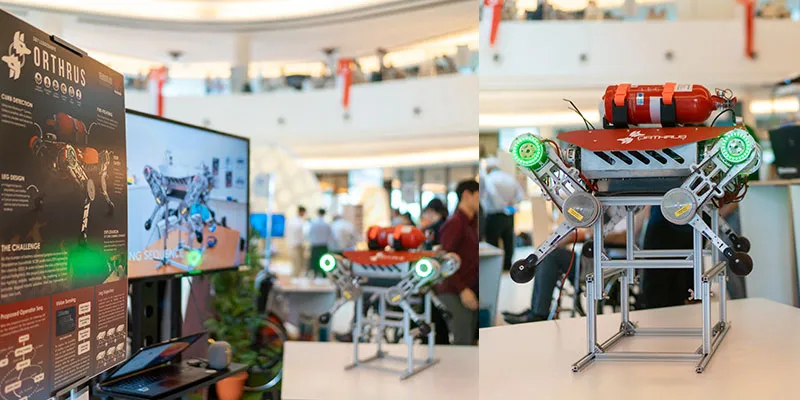 Capstone showcase